


Traffic Fines 2026: what you need to know if you’re on the road a lot!
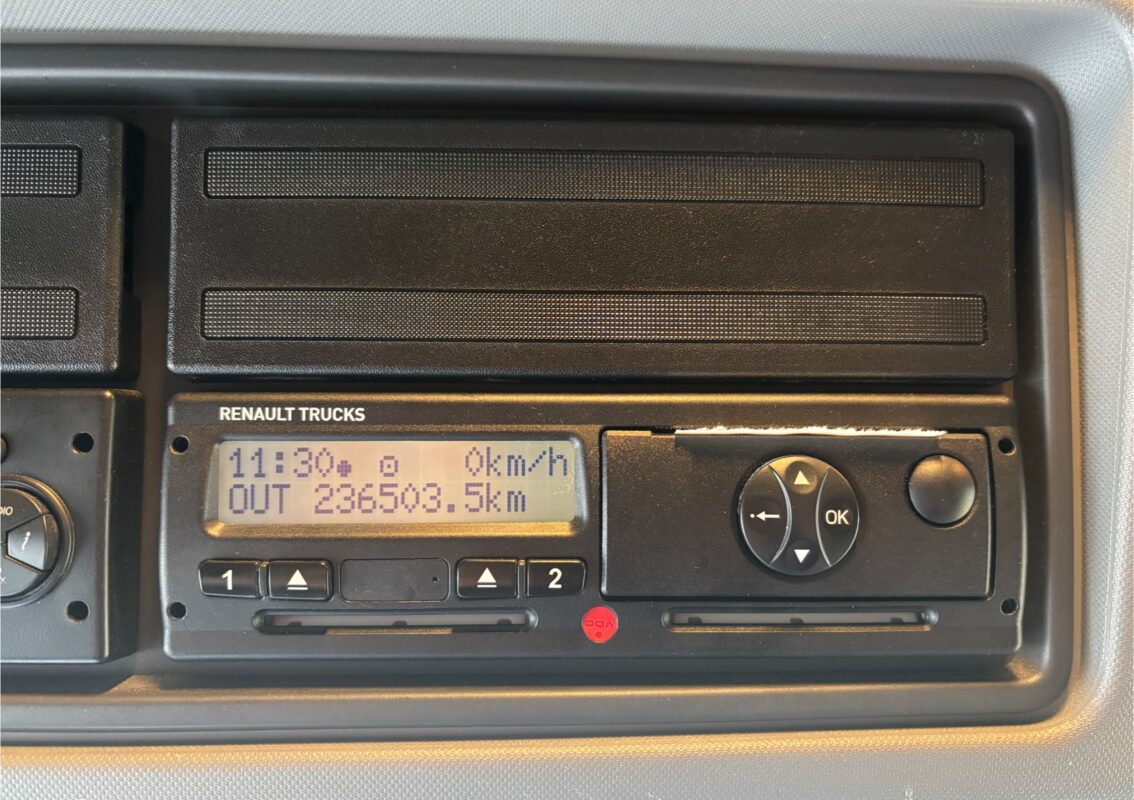
Are you active in professional road transport and driving a truck, or a coach/bus registered after 2006? Then a digital tachograph is a mandatory part of the vehicle. An on-board computer can be a valuable addition to the digital tachograph. But how do they work, and what exactly is the difference? In this blog, we answer the most frequently asked questions about the digital tachograph and on-board computers.
As this is the most frequently asked question, we’re happy to explain. A digital tachograph is an electronic device installed in professional vehicles such as trucks and buses. It records data on driving and rest times, speed, and the distance travelled by the vehicle. This system replaces the older analogue tachographs and provides more accurate and secure data recording. The main purpose of the digital tachograph is to ensure compliance with driving and rest time regulations. This helps guarantee healthier and better working conditions for you as a professional driver. In addition, the digital tachograph contributes to road safety and ensures fair competition within the transport sector.
To use a digital tachograph, you as a professional driver need a personal driver card. This so-called smart card stores all relevant driving and rest time data and is valid for five years. Before starting a trip, the driver inserts the card into the tachograph, which then automatically records all activities. It is essential that you operate the tachograph correctly and enter any manual data accurately to comply with legislation. Failure to do so may result in fines.
Since 1 May 2006, all new heavy trucks and buses within the EU are required to be equipped with a digital tachograph. This applies to vehicles with a maximum authorised mass of more than 3,500 kg and to buses carrying more than eight passengers, excluding the driver. However, there are exemptions. If the vehicle is used for non-commercial passenger transport or specific business activities, such as construction companies or market traders who spend limited time on public roads, you may not be required to install a digital tachograph.
As of 1 January 2025, important changes to tachograph legislation have come into effect. Vehicles used for international transport that are equipped with an analogue or first-generation digital tachograph must be upgraded to the new Smart Tacho 2.
For vehicles fitted with the first-generation smart tachograph (SMT1), the replacement deadline is 19 August 2025. This new generation of tachographs offers improved features, such as automatic registration of border crossings and more accurate positioning, contributing to better enforcement and compliance with driving and rest time regulations.
On-board computers are advanced systems that monitor and record a wide range of vehicle and driver data. An on-board computer can be linked to the digital tachograph, allowing both systems to complement each other. In addition to tachograph functions, on-board computers can track fuel consumption, engine performance, and route information. We therefore see on-board computers as comprehensive fleet management systems that enable transport companies to work more efficiently and gain better insight into the daily activities of drivers and vehicles.
Are you a professional driver? Then it is essential to have a thorough understanding of how the digital tachograph and any on-board computer(s) work. It’s also important to stay up to date with current laws and regulations. Would you like more information about this? Just reach one of our offices’.