


Traffic Fines 2026: what you need to know if you’re on the road a lot!


A forklift here, a pallet there, climbing into the truck, a full day on your feet or hours behind the wheel. Working in the transport and logistics sector puts a lot of demand on your body. Physical strain is part of the job, but it’s also the silent threat that’s always lurking. Because overloading your body often only becomes noticeable when it’s already too late. And that’s a shame, because you’ll still need your body for quite some time. In this blog, you’ll read all about physical strain, how to deal with it smartly and which innovations are making work lighter.
Every role has its own challenges. As a driver, you often sit in the same position for long periods, climb in and out of the truck, and sometimes have to load and unload yourself. Logistics workers spend a lot of time standing and lift, push and pull heavy loads daily. This often happens at a high pace and frequently in shift work.
The result? Complaints involving the back, shoulders, knees and wrists are far from uncommon. Research shows that musculoskeletal disorders (muscle and joint problems) are one of the most common reasons for sick leave in the sector. That means not only pain for you as an employee, but also costs and absenteeism for the employer.
Fortunately, there’s a lot you can do to reduce physical strain. The key? Working smart. And that starts with awareness. Here are a few practical tips for both transport and logistics jobs:
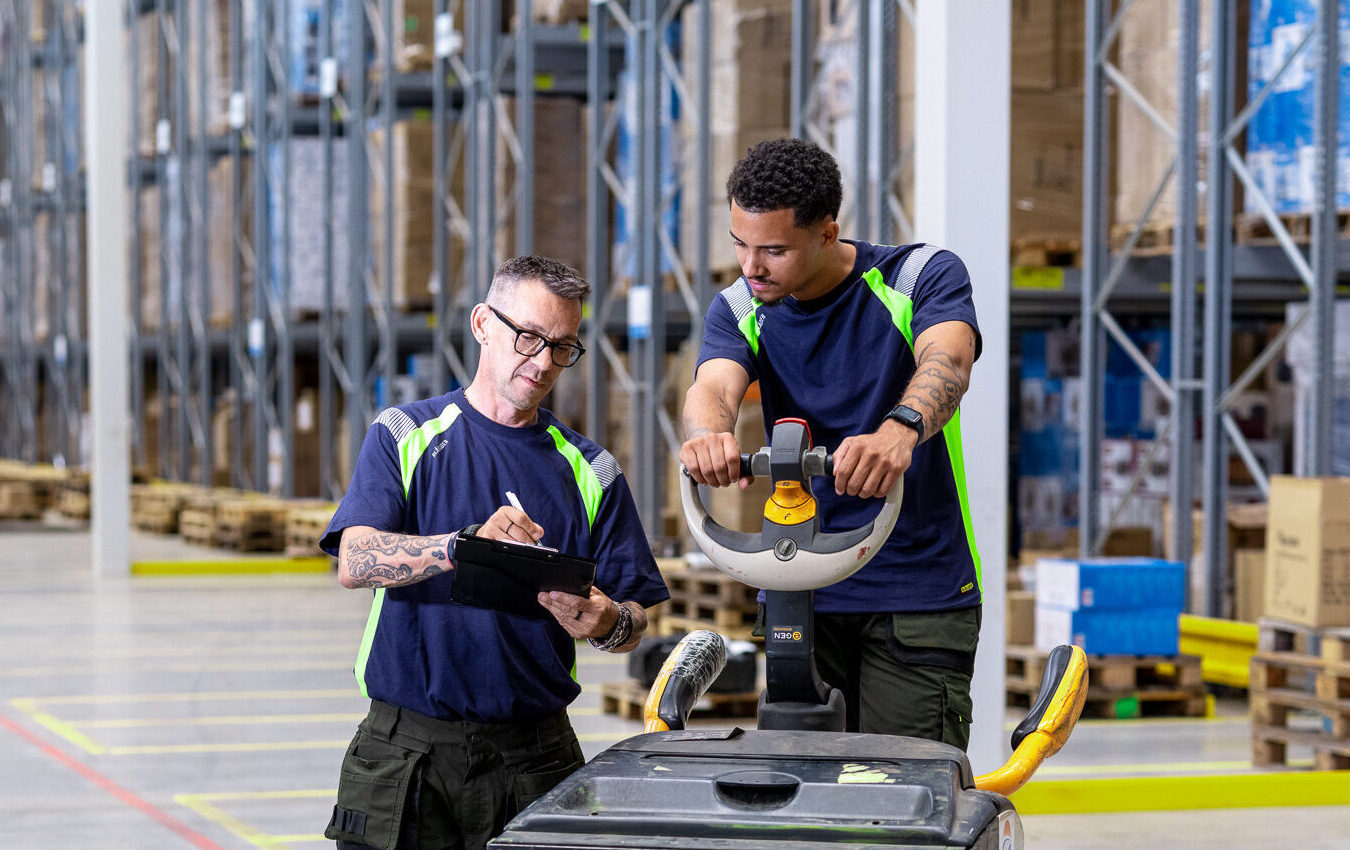
Technology doesn’t stand still, not in our sector either. More smart tools are becoming available to make work physically lighter:
Investing in these kinds of innovations pays off in the long run: less absenteeism, more job satisfaction and higher productivity. Want to make use of these smart solutions? Talk to your employer about it.
If you do physically demanding work every day, a routine that supports your body instead of wearing it down makes all the difference. Small adjustments can have a big impact:
Working smarter starts with the right skills. We offer a wide range of English internal transport training courses for logistics professionals. From forklift and reach truck training to EPT courses: you’ll learn how to work more efficiently, safely and with less physical strain. Practical, hands-on and directly applicable on the work floor.
Ready to invest in yourself and reduce physical strain on the job? Explore all our English logistics training courses here.